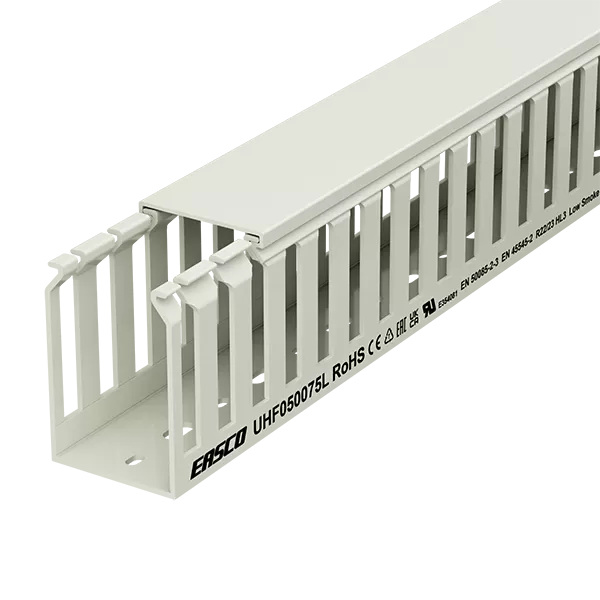
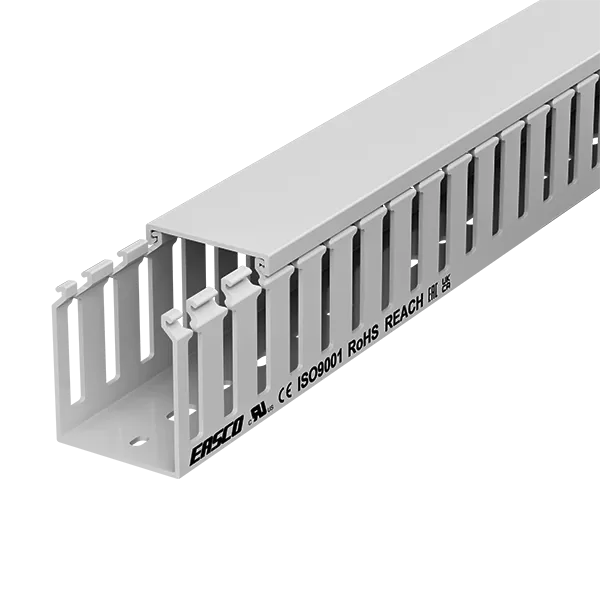
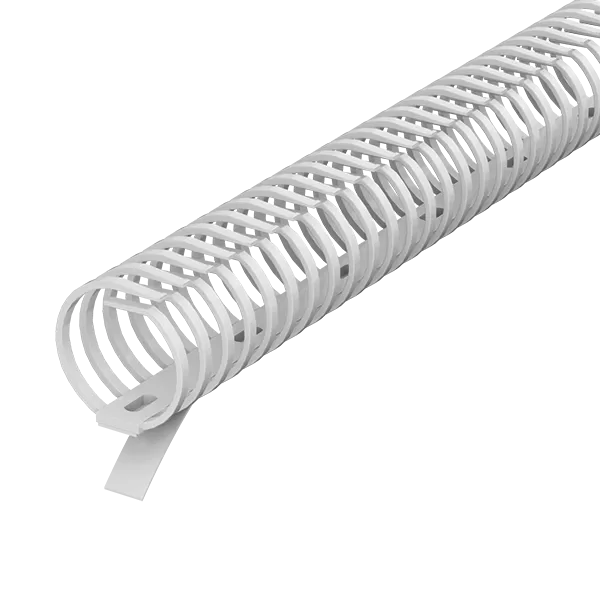
The right cable ducts for an industrial control panel must provide sufficient wiring capacity, convenient cable access, reliable insulation protection, and enough spare space for future modifications. In most control cabinets, slotted ducts made from flame-retardant PVC are suitable for standard power, control, and signal wiring. Low-smoke, halogen-free materials are more appropriate where smoke toxicity, public safety, or transportation standards are important, while flexible ducts are mainly used for moving or curved cable routes.
Selection should begin with the panel layout and cable load—not simply the outside dimensions printed in a catalogue.
Cable duct size should be determined by the actual volume of wires, the required bend radius, the number of cable exits, and the amount of future expansion expected inside the panel.
A duct that is too small creates installation and maintenance problems. Wires may press against the cover, individual conductors become difficult to trace, and additional circuits cannot be installed without rearranging the existing wiring. An excessively large duct, however, occupies valuable panel space and may force the enclosure to become larger than necessary.
When calculating the required capacity, consider:
The outside diameter of every wire and cable
Cable markers, ferrules, shielding, and insulation
Wire crossings inside the duct
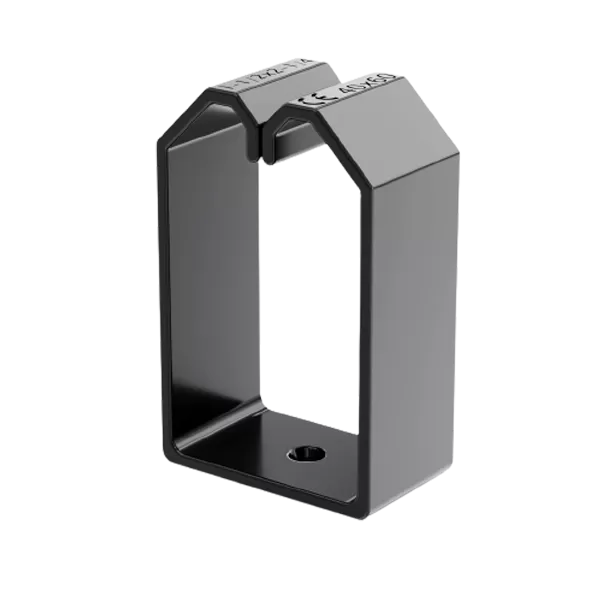
The space occupied by dividers or retainers
Minimum cable bend-radius requirements
Power and signal circuit separation
Additional wiring expected during future upgrades
Nominal width and height do not represent the complete usable area. Side-wall thickness, finger profiles, cover engagement, and internal accessories reduce the available space.
For example, a shallow and wide electrical wiring duct may fit well beneath a row of terminal blocks because conductors can be arranged side by side. A deeper profile may be more suitable for a main vertical route carrying several cable bundles.
The duct should not be packed until the cover compresses the wires. A properly sized system allows the cover to close naturally and permits a technician to remove one conductor without disturbing the entire bundle.
Understanding the main cable duct types helps panel builders match slot geometry to wire diameter, connection density, and maintenance requirements.
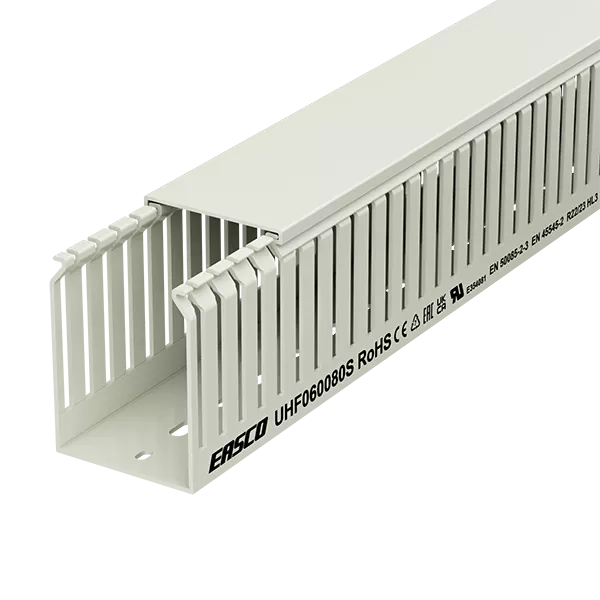
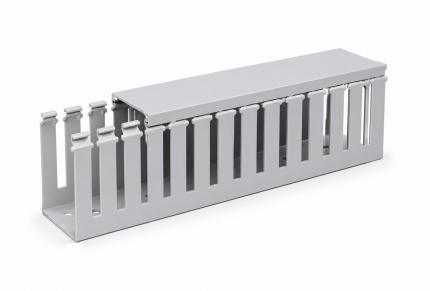
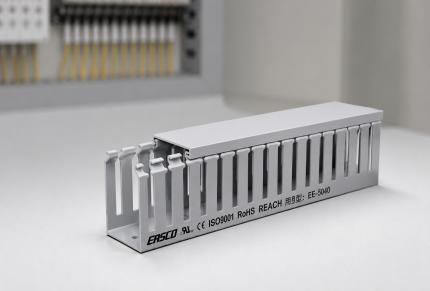
Narrow-slot designs have closely spaced fingers and provide many cable exit positions. They are particularly useful around terminal blocks, relays, PLC modules, and other components with closely spaced connection points.
They are generally suitable for:
Small control wires
Instrumentation circuits
High-density terminal rows
PLC input and output wiring
Panels requiring frequent wire branching
Because each conductor can leave the duct close to its termination point, narrow-slot designs help create shorter and more orderly wire routes.
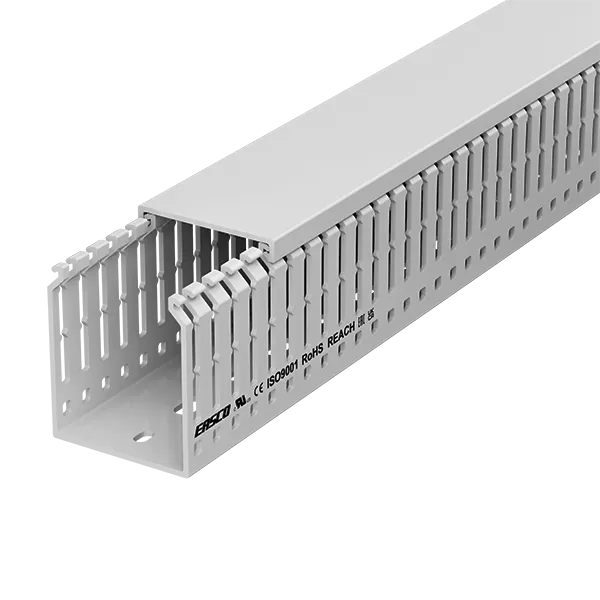
Wide-slot ducts have larger openings and fewer fingers. They are better suited to larger conductors, grouped cables, or applications where several wires need to leave the duct together.
They may be preferred for:
Larger power conductors
Multi-core cables
Cable bundles
Drives and motor-control equipment
Less densely spaced connection points
When evaluating a cable duct slotted product, buyers should inspect more than the opening width. Finger strength, edge finish, and breakability also affect installation quality.
Smooth fingers help protect insulation when conductors are inserted or removed. Breakable fingers allow installers to create a larger opening without cutting the complete side wall.
Solid-wall ducts can be useful for continuous routes where cables rarely exit from the sides. They provide greater containment but offer less routing flexibility during later modifications.
A flexible cable duct serves a different purpose. It is commonly used between a cabinet body and a moving door, around curved sections, or where rigid rectangular duct cannot follow the required route.
For most fixed control-panel layouts, slotted duct remains the practical choice because it provides easier access to individual conductors.
The main material decision depends on fire performance, temperature, mechanical requirements, environmental exposure, and project compliance standards.
A PVC cable duct is widely used in standard industrial electrical cabinets because it combines electrical insulation, low weight, dimensional stability, and relatively easy cutting.
A suitable PVC product should have:
A verified flame-retardant classification
Smooth internal and external edges
Stable fingers that do not crack during installation
Reliable cover retention
Consistent dimensions
Resistance to the expected cabinet temperature
Appropriate resistance to moisture and industrial chemicals
Buyers should not assume that every PVC duct has identical performance. The flame rating and temperature range should be confirmed for the specific product series.
A low smoke duct may be required where smoke density and corrosive gas emissions are significant safety concerns. These products are often specified in rail transportation, public buildings, marine systems, and other enclosed environments where safe evacuation and equipment protection are important.
“Halogen-free” identifies a material-performance characteristic rather than one universal polymer. Standard PVC and low-smoke, halogen-free ducts should therefore not be treated as interchangeable. Selection should follow the equipment specification, applicable standards, and end-use environment.
A professional purchase specification should include more than the phrase “cable ducts.”
Confirm the following details with the manufacturer:
Duct material
Width and height
Internal usable dimensions
Slot width and finger spacing
Standard section length
Cover design
Mounting-hole arrangement
Flame classification
Operating temperature
Colour
Dimensional tolerances
Required dividers and cable duct accessories
Compliance documents
Packaging quantity
Customisation requirements